Industry
Oct 20, 2025
The Integration Boom: Why AI + No-Code Tools Are the Backbone of 2025 Tech | Tetherly.ai
The Integration Boom: Why AI + No-Code Tools Are the Backbone of 2025 Tech | Tetherly.ai
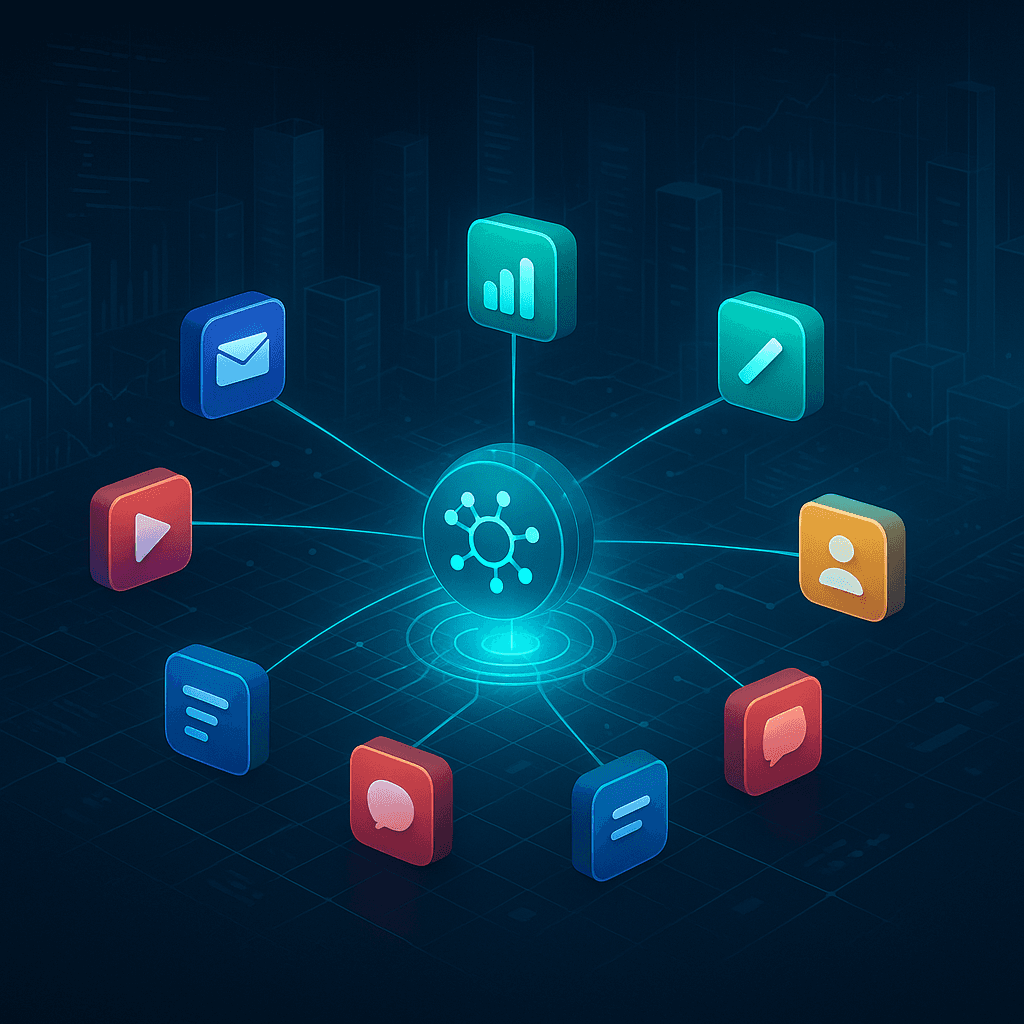
A New Infrastructure Layer Is Emerging
The last decade of software growth has been defined by proliferation.
Teams now rely on dozens—sometimes hundreds—of applications to communicate, document, analyze, collaborate, and coordinate their work. On average, enterprise organizations use more than 130 different SaaS applications across teams, regions, and business units (Okta Business at Work Report, 2024).
But more software has not equaled more productivity.
Instead, work has become increasingly fragmented. Information is scattered across systems. Teams are constantly switching tools to gather context. Critical decisions happen in chat applications while documentation lives elsewhere. And the burden of moving information between systems has fallen on people — the most expensive and error-prone layer in the workflow.
This fragmentation has created a silent bottleneck inside modern organizations — and it is now forcing a fundamental shift in how software operates.
In 2025 and beyond, integrations are no longer a feature. They are the operating layer of work.
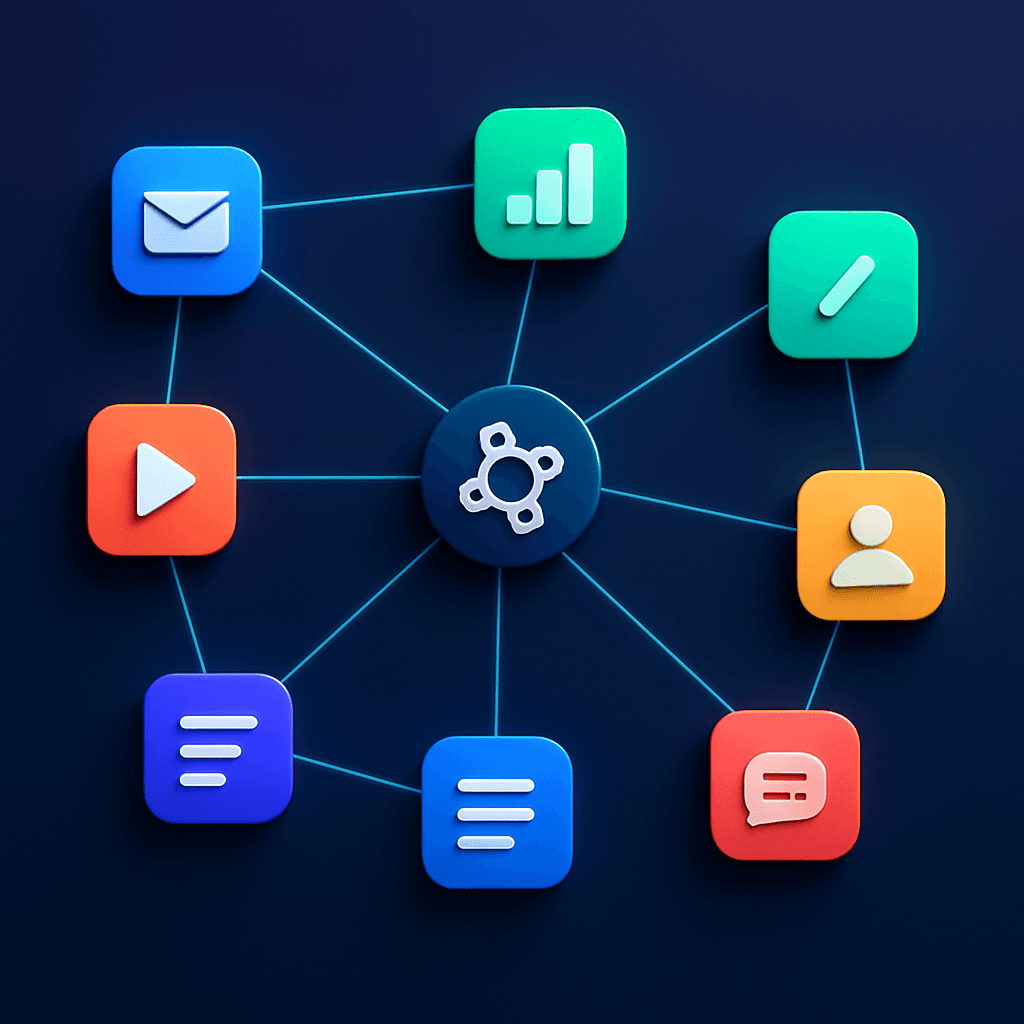
Software is no longer valuable in isolation.
Its value now depends on how well it connects.
Why Integrations Have Become Strategic Infrastructure
Historically, integrations were considered technical overhead — a set of API endpoints and scripts that were handled by backend engineers only when necessary.
But as organizations scale, the lack of seamless interoperability leads to:
Delayed workflows
Duplicated effort
Disconnected decision-making
Lost historical context
Reduced operational speed
This isn’t a minor inconvenience — it is a structural drag on performance.
A recent McKinsey study notes that employees lose up to 9% of their total working time to “tool navigation and data transfer.”
At the organizational level, this becomes millions of dollars in lost productivity.
The companies that are outperforming today — particularly in finance, healthcare, logistics, and SaaS — share a core operational characteristic:
Their systems talk to each other without people acting as intermediaries.
This is why integration platforms are shifting from “nice-to-have” utilities to mission-critical infrastructure.
The market reflects this shift:
Gartner predicts that 75% of organizations will adopt a combination of AI and no-code automation to unify their digital ecosystems by 2026.
IDC projects the integration platform market to exceed $25B by 2027 — driven primarily by internal workflow automation, not external APIs.
Software is no longer evaluated on what it does — but on how fluidly it connects.
From Custom Code to No-Code: The Democratization of Integration
For years, integration required:
backend engineers
bespoke scripts
custom middleware
ongoing maintenance
This created two problems:
Integrations were expensive to build.
They broke the moment tools evolved.
Organizations were effectively locked into their own technical glue.
No-code integration platforms changed this dynamic.
Now, non-technical users can connect tools, automate workflows, and sync data without writing a line of code.
But the most meaningful shift isn’t the interface — it’s the logic layer.
AI is now handling:
Schema matching
Event triggers
Context interpretation
Routing decisions
Error handling and correction
What previously required engineering judgment can now be executed autonomously.
This is the beginning of agentic workflow automation — where the system understands not just what to move, but why and how to maintain its integrity.
This is the difference between:
automation (following instructions)
and agency (making decisions)
Why This Matters for Businesses
Disconnected tools do not just slow teams down — they compound operational inefficiency.
When systems don’t talk to each other:
Information must be manually duplicated
Errors accumulate silently
Workflows lose context
Communication becomes reactive rather than proactive
Teams spend more time coordinating than executing
This creates organizational drag that becomes more visible as companies grow.
No-Code AI Integration Directly Solves This:
Challenge | Impact | AI + No-Code Benefit |
|---|---|---|
Manual data transfer | Lost time + high error rate | Automated synchronization |
Disconnected systems | Fragmented decision-making | Unified workflow context |
IT dependency | Bottlenecks | Business users can self-serve |
Siloed communication | Misalignment | Shared visibility across tools |
Workflow breakage | Operational friction | Self-healing data flows |
When workflows move fluidly across tools:
Teams make decisions faster
Onboarding accelerates
Collaboration becomes aligned
Work compounds instead of stalling
Simply put:
Connectivity has become a competitive advantage.
The Next Era: Agentic AI Systems
The next step change is already unfolding: agentic AI workflows.
These systems will:
Detect when a workflow is degrading
Repair broken automations automatically
Redirect data intelligently
Trigger updates based on context shifts
Learn from patterns and outcomes
This is not theoretical.
Early forms are already being piloted in:
Supply chain orchestration
Revenue operations workflow engines
Healthcare records management
Financial fraud detection networks
Organizations are moving toward workflows that run themselves.
The strategic implication is clear:
Work will increasingly be orchestrated rather than manually managed.
Where Tetherly.ai Fits In
Tetherly.ai operates on the belief that the future of productivity lies in eliminating the manual layer between systems.
We build AI-powered, no-code integrations that:
Move data across tools in real time
Preserve context, not just content
Give organizations control over workflow governance
Reduce coordination overhead
Enable non-technical teams to automate workflows confidently
Tetherly.ai is not "just another integration tool."
It is workflow infrastructure — designed for companies who want to move faster than their competitors without increasing operational load.
Connectivity is not a feature.
It is the foundation of modern execution.
The Bottom Line
In 2026 and beyond:
The number of tools will continue to grow.
The volume of data will increase.
The speed of decision-making will accelerate.
The cost of human coordination will become unsustainable.
The organizations that win will be the ones that build workflows that flow without friction.
Integration is no longer optional. It is the operating model.
And AI + no-code platforms are the backbone that makes it possible.
Connectivity = competitiveness.
The shift is already happening.
The only question is who adapts first.